
FLUXFLUX.1 Schnell1:1
Use case
Game asset
Visual style
Photorealistic
Subject
Vehicle
show the view from inside the truck cabin with the headlight illuminating the road ahead
Subject
Transport concepts with a clear mission and engineering logic.
By FluxDream Updated 7/20/2026
Examples in library
25
Original FluxDream examples
show the view from inside the truck cabin with the headlight illuminating the road ahead
ford focus 2012 , silver gray , license plate is " 34 ZF 0156 ", with "TR" blue countrycode
ford focus 2012 , silver gray , license plate is " 34 ZF 0156 ", with "TR" blue countrycode
ford focus 2012 , silver gray , license plate is " 34 ZF 0156 ", with "TR" blue countrycode
the hot wheels mustang is shown in a blue and green package, inspired by Adam Chmielowski, dau-al-set, reddit contest winner, hotwheels, hot wheels, green and blue, toy package, blue and green
Microsoft teams icon, retro 8 bit pixel art
Microsoft teams icon, retro 8 bit pixel art
Microsoft teams icon, retro 8 bit pixel art
headlight illuminating the dark dirt road ahead as the cart moves forward

Shape the scene for a 4:5 feed crop with one immediate focal action and a calm area for optional interface overlays.
A compact electric produce van with a low loading floor at an early market. Shape the scene for a 4:5 feed crop with one immediate focal action and a calm area for optional interface overlays. Sketch and line-art treatment with varied contour weight, exposed construction, limited hatching, and intentional unfinished areas. Use a centered frontal frame only where symmetry explains the object or task. No logos, watermark, celebrity likeness, duplicated subjects, or unreadable decorative text.

Build a teaching image around one relationship, using accessible contrast and space for labels to be added accurately later.
A two-seat research skiff designed for shallow wetland water and equipment storage. Build a teaching image around one relationship, using accessible contrast and space for labels to be added accurately later. Original speculative design where technology has a visible function, material logic, social consequence, and controlled luminous accents. Use a centered frontal frame only where symmetry explains the object or task. Keep anatomy, perspective, reflections, and cast shadows internally consistent. No watermark or brand marks.

Compose one sequential story beat that makes the next shot easy to infer while preserving spatial geography.
A two-seat research skiff designed for shallow wetland water and equipment storage. Compose one sequential story beat that makes the next shot easy to infer while preserving spatial geography. Isometric construction with a consistent projection grid, modular scale, one shadow direction, and unobstructed functional detail. Use a centered frontal frame only where symmetry explains the object or task. Keep anatomy, perspective, reflections, and cast shadows internally consistent. No watermark or brand marks.

Treat the image as a production storyboard frame with clear blocking, camera axis, action, and continuity-critical details.
A compact electric produce van with a low loading floor at an early market. Treat the image as a production storyboard frame with clear blocking, camera axis, action, and continuity-critical details. Believable photography with a physically placed camera, available light, restrained depth of field, and ordinary surface detail. Use a close working-distance frame that reveals material detail without cropping functional parts. No logos, watermark, celebrity likeness, duplicated subjects, or unreadable decorative text.

Connect one product benefit to a believable visual situation, keeping the product hierarchy stronger than the set dressing.
A compact electric produce van with a low loading floor at an early market. Connect one product benefit to a believable visual situation, keeping the product hierarchy stronger than the set dressing. Sketch and line-art treatment with varied contour weight, exposed construction, limited hatching, and intentional unfinished areas. Use an asymmetric wide frame with one strong visual anchor and a quiet counterweight. No logos, watermark, celebrity likeness, duplicated subjects, or unreadable decorative text.

Direct a campaign image with a clear value proposition, material accuracy, and deliberate room for later copy.
A two-seat research skiff designed for shallow wetland water and equipment storage. Direct a campaign image with a clear value proposition, material accuracy, and deliberate room for later copy. Original speculative design where technology has a visible function, material logic, social consequence, and controlled luminous accents. Use an asymmetric wide frame with one strong visual anchor and a quiet counterweight. Keep anatomy, perspective, reflections, and cast shadows internally consistent. No watermark or brand marks.

Create a consistent marketplace image with accurate geometry, neutral color, controlled shadows, and generous edge clearance.
A compact electric produce van with a low loading floor at an early market. Create a consistent marketplace image with accurate geometry, neutral color, controlled shadows, and generous edge clearance. Editorial art direction with purposeful gesture, graphic spacing, tactile styling, and a visual argument suited to publication. Use an asymmetric wide frame with one strong visual anchor and a quiet counterweight. No logos, watermark, celebrity likeness, duplicated subjects, or unreadable decorative text.

Treat the frame as a catalog asset with repeatable camera height, clean separation, and truthful material rendering.
A two-seat research skiff designed for shallow wetland water and equipment storage. Treat the frame as a catalog asset with repeatable camera height, clean separation, and truthful material rendering. Watercolor on visible cold-press paper with transparent wash order, pigment blooms, dry edges, and reserved paper highlights. Use an asymmetric wide frame with one strong visual anchor and a quiet counterweight. Keep anatomy, perspective, reflections, and cast shadows internally consistent. No watermark or brand marks.
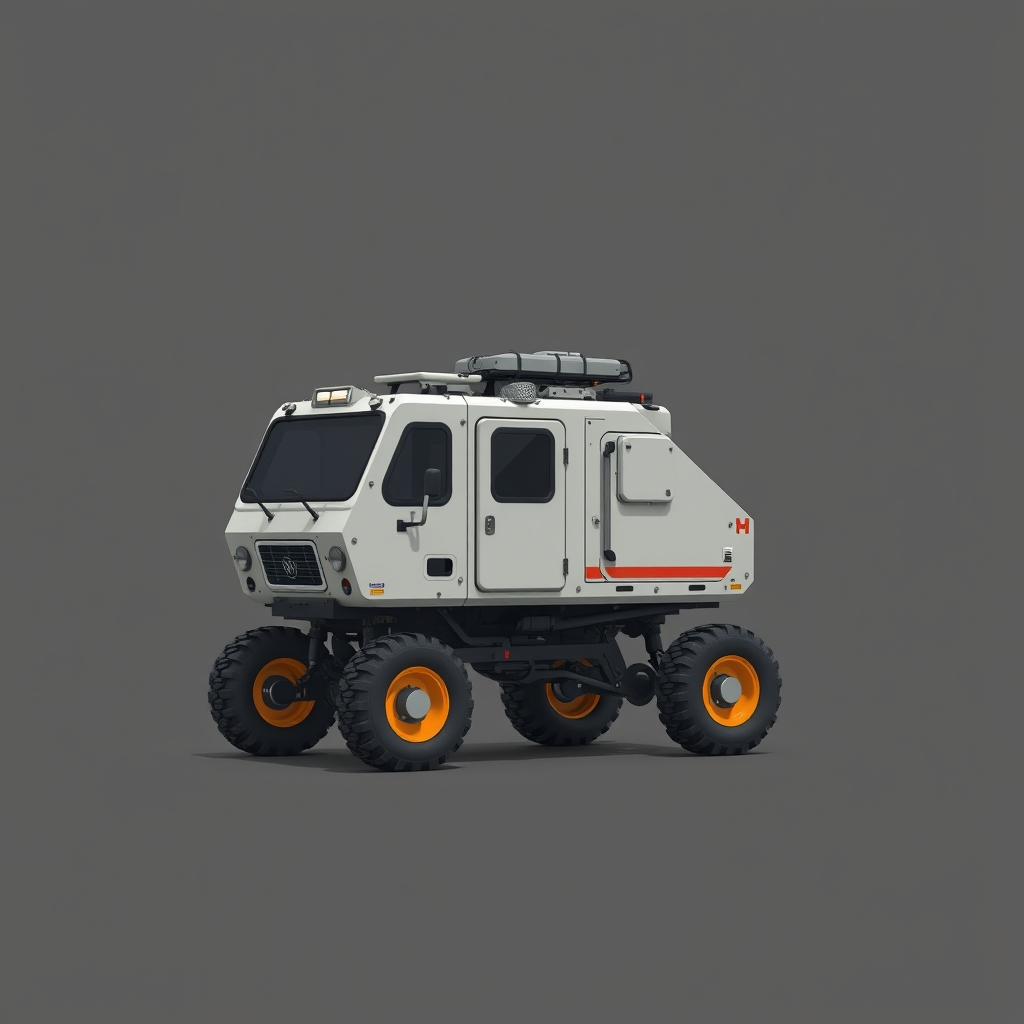
Treat the image as a handoff-ready game concept with clear scale, materials, access points, and unobstructed shape.
A narrow mountain maintenance vehicle with articulated wheels and visible access panels. Treat the image as a handoff-ready game concept with clear scale, materials, access points, and unobstructed shape. Minimal composition with a strict object count, exact alignment, restrained color roles, and generous intentional negative space. Use a close working-distance frame that reveals material detail without cropping functional parts. Use original design language. Avoid existing characters, artist imitation, logos, and meaningless generated words.
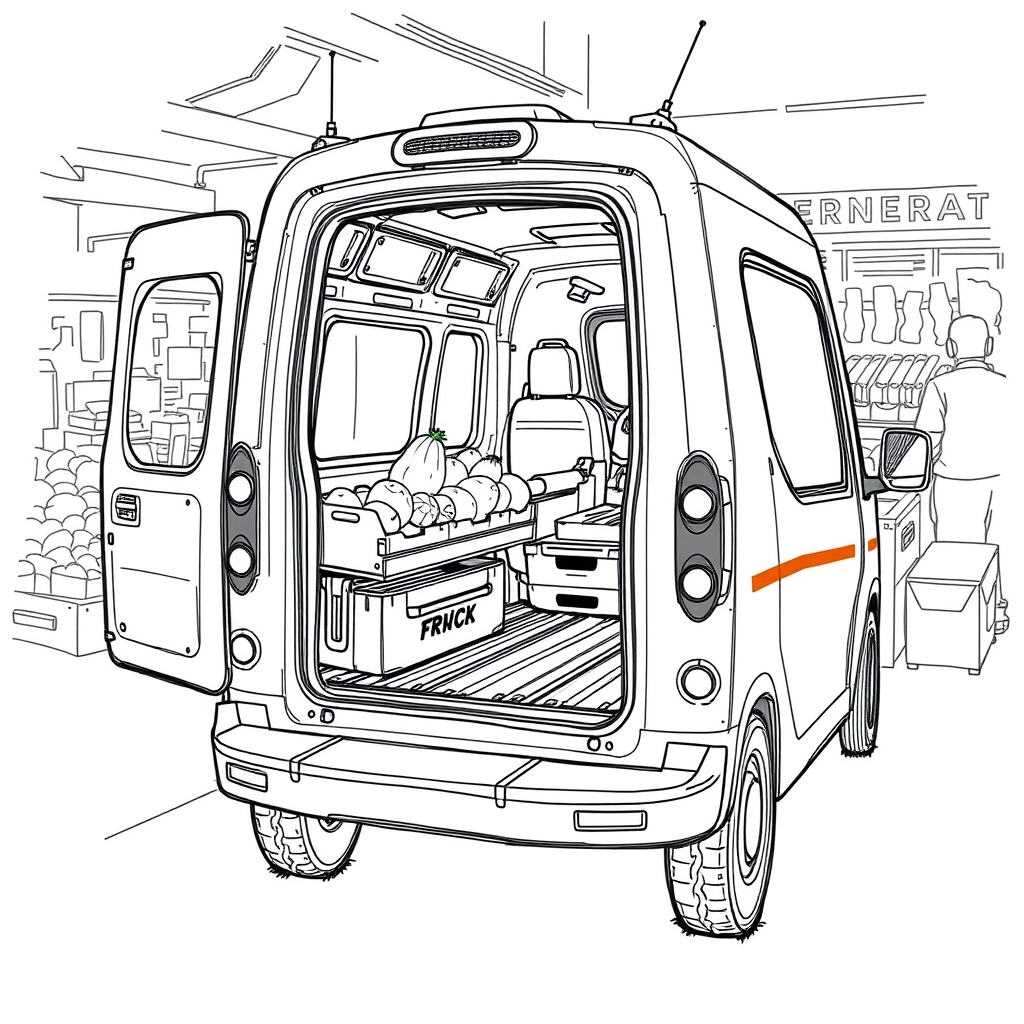
Design the subject as a production game asset with a readable silhouette, fixed viewing angle, and functional construction.
A compact electric produce van with a low loading floor at an early market. Design the subject as a production game asset with a readable silhouette, fixed viewing angle, and functional construction. Sketch and line-art treatment with varied contour weight, exposed construction, limited hatching, and intentional unfinished areas. Use a centered frontal frame only where symmetry explains the object or task. No logos, watermark, celebrity likeness, duplicated subjects, or unreadable decorative text.
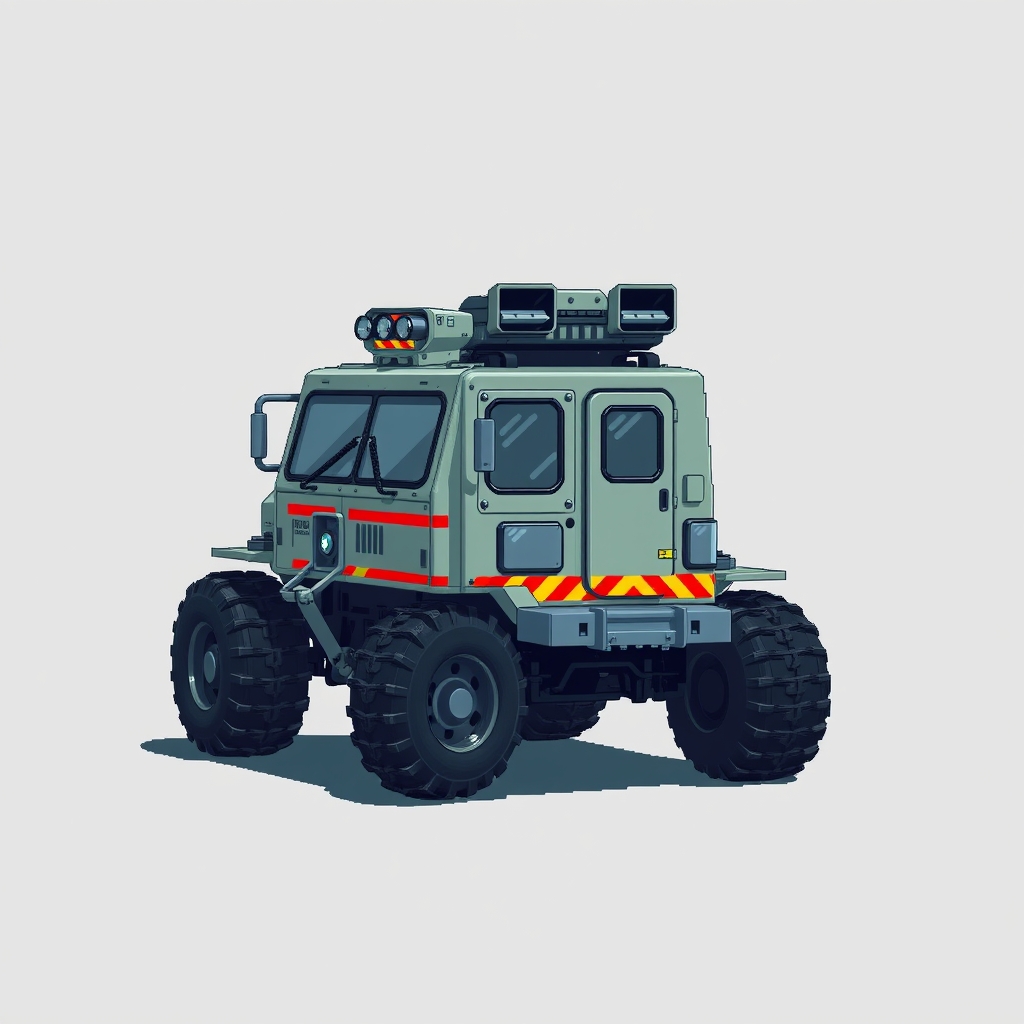
Treat the image as a handoff-ready game concept with clear scale, materials, access points, and unobstructed shape.
A narrow mountain maintenance vehicle with articulated wheels and visible access panels. Treat the image as a handoff-ready game concept with clear scale, materials, access points, and unobstructed shape. Pixel art at a fixed native scale with crisp clusters, a limited palette, no antialiasing, and no soft gradients. Use a centered frontal frame only where symmetry explains the object or task. Use original design language. Avoid existing characters, artist imitation, logos, and meaningless generated words.

Direct the frame as part of a coherent editorial series with a specific visual argument and repeatable art direction.
A compact electric produce van with a low loading floor at an early market. Direct the frame as part of a coherent editorial series with a specific visual argument and repeatable art direction. Period-specific print and camera cues, limited production color, material wear that follows the surface, and no copied historical artwork. Use a centered frontal frame only where symmetry explains the object or task. No logos, watermark, celebrity likeness, duplicated subjects, or unreadable decorative text.
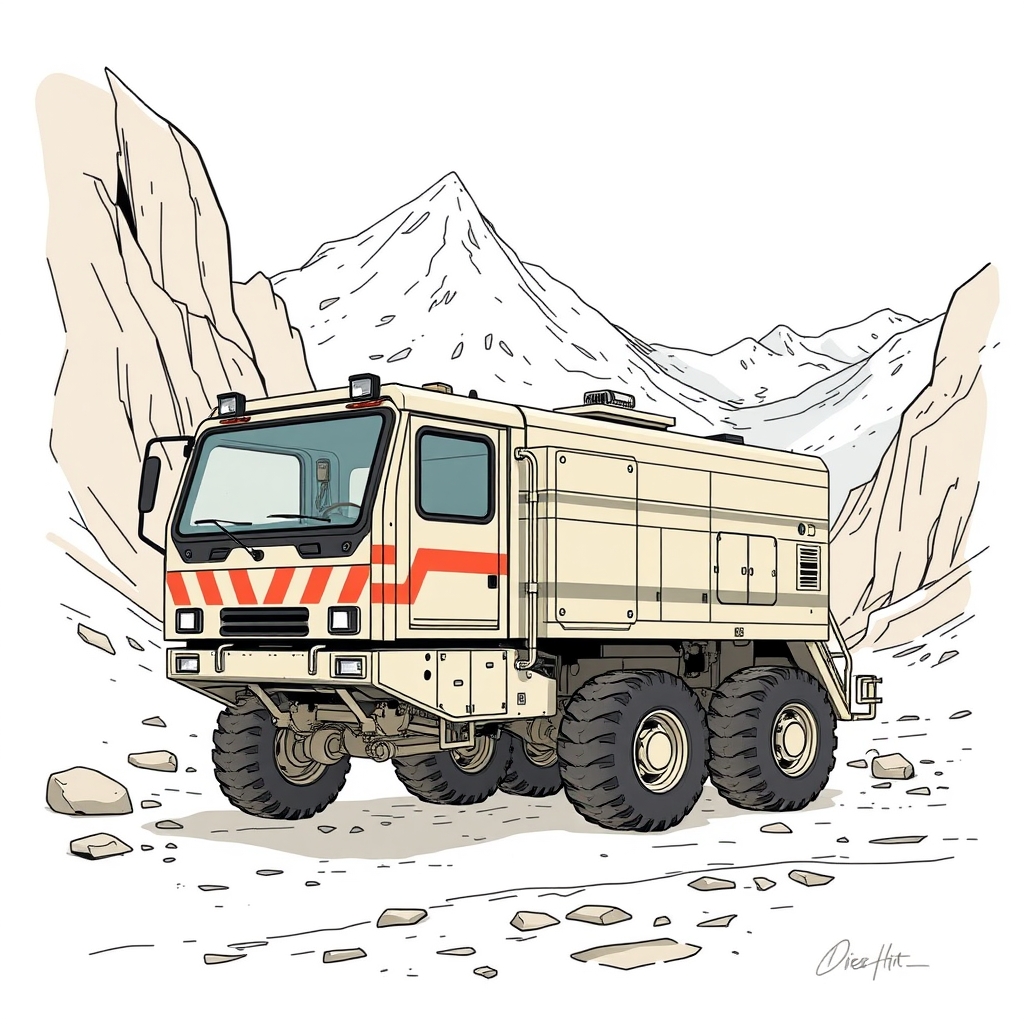
Treat the image as a design exploration with production-relevant structure rather than a finished decorative scene.
A narrow mountain maintenance vehicle with articulated wheels and visible access panels. Treat the image as a design exploration with production-relevant structure rather than a finished decorative scene. Illustrated construction with a coherent shape language, visible mark system, selective detail, and strong value hierarchy. Use a close working-distance frame that reveals material detail without cropping functional parts. Use original design language. Avoid existing characters, artist imitation, logos, and meaningless generated words.
Illustrate a scene of burnt brick unloading or de-harking from a traditional brick kiln. The bricks should appear darkened or burnt, having just completed the firing process. Workers, equipped with basic tools such as gloves and metal hooks, should be in the process of unloading the still-hot bricks from the kiln. The bricks are being carefully removed from the kiln's base, and some are stacked in neat piles nearby. The scene should also include the remnants of burnt wood or fuel used for firing, scattered around the base of the kiln. Surround the setting with a rural landscape, with trees and simple tools visible, creating an atmosphere of manual labor in a traditional brick-making process
Illustrate a scene of burnt brick unloading or de-harking from a traditional brick kiln. The bricks should appear darkened or burnt, having just completed the firing process. Workers (african, equipped with basic tools such as gloves,helment, coat, gun boot and metal hooks, should be in the process of unloading the still-hot bricks from the kiln. The bricks are being carefully removed from the kiln's base, and some are stacked in neat piles nearby. The scene should also include the remnants of burnt wood or fuel used for firing, scattered around the base of the kiln. Surround the setting with a rural landscape, with trees and simple tools visible, creating an atmosphere of manual labor in a traditional brick-making process
Illustrate a scene of burnt brick unloading or de-harking from a traditional brick kiln. The bricks should appear darkened or burnt, having just completed the firing process. Workers (african, equipped with basic tools such as gloves,helment, coat, gun boot and metal hooks removing bricks, should be in the process of unloading the still-hot bricks from the kiln. The bricks are being carefully removed from the kiln's base, and some are stacked in neat piles nearby. The scene should also include the remnants of burnt wood or fuel used for firing, scattered around the base of the kiln. Surround the setting with a rural landscape, with trees and simple tools visible, creating an atmosphere of manual labor in a traditional brick-making process